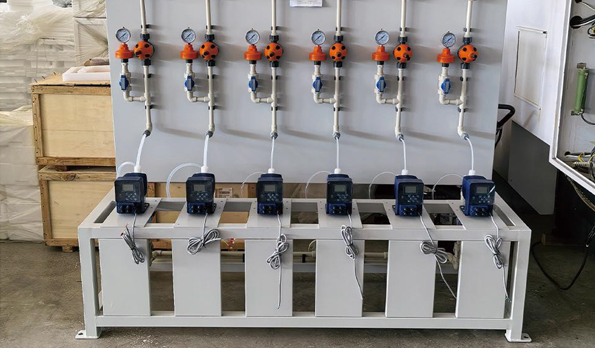
In modern water treatment, chemical processing, and industrial automation, the demand for precise, repeatable fluid dosing has never been higher. A digital metering pump has become the preferred choice for engineers and plant operators who need accurate chemical injection, real-time monitoring, and easy integration into programmable control systems. Unlike older mechanical or analog dosing pumps, a digital metering pump combines a microprocessor-controlled drive with a high-precision pumping head, allowing users to set flow rates, monitor stroke status, and communicate directly with PLCs and SCADA platforms.
How a Digital Metering Pump Works
At its core, a digital metering pump is a positive-displacement pump driven by a stepper motor or a solenoid actuator controlled by an onboard digital controller. The controller precisely regulates two key parameters: the stroke length (the volume displaced per stroke) and the stroke frequency (the number of strokes per minute). By adjusting these two parameters independently, the pump can deliver a wide turndown ratio while maintaining excellent repeatability, typically within ±1% of the setpoint.
During each stroke, the pump draws chemical through the inlet check valve and discharges it through the outlet check valve into the process line. Because the diaphragm separates the wetted end from the drive mechanism, the pumped chemical never leaks into the motor area, which is critical when dosing corrosive, toxic, or expensive reagents such as sodium hypochlorite, sulfuric acid, caustic soda, coagulants, or scale inhibitors.
Key Advantages Over Traditional Analog Pumps
The shift from analog to digital dosing brings several measurable benefits. First, precision and repeatability improve dramatically. Digital pumps can hold a stable output even when suction or discharge pressure fluctuates, reducing overdosing and chemical waste. Second, operational visibility is enhanced: a backlit LCD displays flow rate, totalized volume, stroke count, and fault codes in real time. Third, remote communication becomes possible through 4–20 mA signals, pulse inputs, and increasingly Modbus RTU or PROFIBUS interfaces, which means the pump can be controlled and diagnosed from a central control room.
Energy efficiency is another advantage. Stepper-motor-driven digital metering pumps consume less power than continuously running motor-driven pumps because they only energize the motor during the stroke. Maintenance intervals are also longer, thanks to predictable diaphragm life and self-diagnostic alarms that alert operators before a small leak or blockage becomes a process upset.
Typical Applications
Digital metering pumps are widely used in water and wastewater treatment for pH adjustment, chlorination, flocculant dosing, and antiscalant injection in reverse osmosis systems. In the chemical industry, they inject additives, catalysts, and neutralizing agents into batch reactors. In food and beverage production, they dose sanitizing agents and flavorings under strict hygienic conditions. Other common fields include power plants, boilers, cooling towers, swimming pools, agriculture hydroponics, and oil and gas pipeline injection.
How to Select the Right Digital Metering Pump
Choosing the correct digital metering pump requires matching five parameters to the process: maximum required flow rate, maximum discharge pressure, chemical compatibility of wetted materials (PVDF, PP, PTFE, ceramic), suction lift conditions, and the required control interface. Always size the pump so the normal operating point sits between 30% and 80% of maximum capacity, which preserves accuracy and extends diaphragm life. For aggressive chemicals, ensure the valve balls, seats, and diaphragms are made of PTFE or suitable elastomers, and verify that the pump carries relevant CE, EAC, or NSF food-grade approvals.
Conclusion
A digital metering pump is no longer a premium upgrade — it is the standard for modern, automated chemical dosing. By delivering accurate, traceable, and remotely monitorable injection, it helps plants reduce chemical consumption, meet discharge regulations, and stabilize process quality. Whether integrated into a larger dosing plant or operated as a standalone unit, the digital metering pump remains the heart of any reliable chemical dosing system.





 English
 Español
 Portugues
 Deutsch


 WhatsApp
 Téléphone
 E-mail
 message
Commentaire
(0)